July 14, 2013 by katie
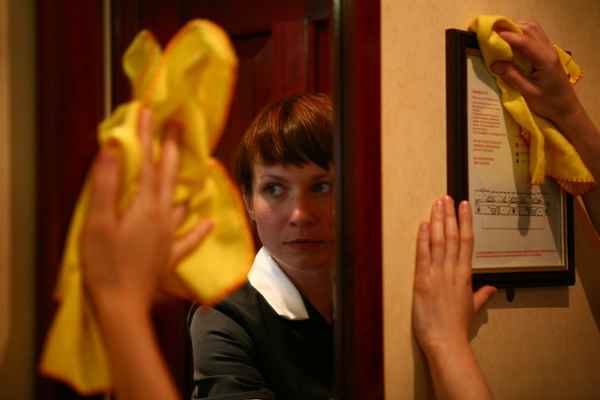
We’re thinking about making a digital interactive game version of our production Black Tonic.
The idea would be to open out access to this popular performance, which in its ‘reality’ version has very restricted audience numbers. It wouldn’t be a replacement, rather it would reinterpret the material and narrative content in a new way for a new medium.
Watch this space.
by katie
Audience responses to the question “What is home?”
At the end of their Homing Instinct experience audience members wrote their responses to the question on the wing of a paper aeroplane, then pegged the plane up on a line with hundreds of others.
I don’t know any more. I’ve told myself for 3 years that it’s wherever I lay my hat… but I don’t know any more.
A place that you feel a sense of privacy, comfortable, want to invite people to come and see you and have fun – chat – eat, and you want to come back to. To roll on the floor. Play drums loudly. Grow things – see them grow instead of moving to the next place.
No place – just to be free – to fly free.
Home is your original base, childhood and original friends first made. It’s your first part of your history. This stays with you always.
Home is where I am comfortable, happy and secure. Where the people around me love me for what I am, and I love them for what they are.
Big fridge, cheese and shower gel I can’t afford, things to break, arguments, beach (blow out cobwebs).
Home is by the sea, eating fish & chips with my Mum & Dad by the pier and listening to the seagulls and not having to worry about anything.
Home is in your head.
Home is comfort, security, a sense of ease and familiarity. – Somewhere taken for granted when you are there, missed when you are not.
The freedom to be spontaneously myself
Somewhere you long for, somewhere that causes you pain, a place of warmth and welcome, things that are familiar – familiarity, in my husband’s arms.
A place to be alone.
by katie
METRO Birmingham 2004
The Other Way Works is part of the growing number of Theatre Companies who devise their work instead of script it… For its latest show, Homing Instinct, the focus remains on telling women’s stories, but has shifted to a more personal, intimate arena: the company members’ own homes and backgrounds.
By placing the audience at the centre of the performance, and involving them actively rather than as passive observers, The Other Way Works is seeking to break down traditional barriers between performers and audience, making theatre something you go to do, not just see.
Trying to classify the productions of The Other Way Works is rather like attempting to wrestle a grown adult into a cardboard box (although, incidentally, if you do ever need to know how to do this, their current production ‘Homing Instinct’ includes a helpful demonstration…) Fiona Ferguson caught up with founding members Jane Packman and Katie Day to investigate that indefinable quality…
For Birmingham-based theatre company The Other Way Works, all the world’s a stage. Or at least, all the world’s on the stage. A performance of their interactive theatre generally involves more audience members treading the boards than actors, as they take on the roles of guests, participants and explorers in a genre-defying mix of installation art, storytelling, movement and soundscapes. In a nutshell, it’s not exactly your average theatre experience, but that was never their intention. The company met whilst studying drama at Birmingham University, and even amidst the safe confines of these traditional redbrick walls they started to veer off from the norm, as Jane explains: “The university was limited in what they accepted as theatre; it was all traditional, old plays; ‘proper’ drama. At the end of our degrees we got together in a group we enjoyed working with and decided that we wanted to do something different.”
Thinking outside of the box
Something very different… “We could have put on Shakespeare, but that’s not what we’re passionate about. I’m passionate about creating a different experience for theatre-goers. I find that a lot of theatre doesn’t engage me. As a medium, its role has been taken over by film or TV, so this is a new way of challenging the role of the audience. I like a certain amount of challenging…” Challenge, however, always meets resistance, and the current culture of documentary and reality TV accustomises us to sitting back and switching off, rather than participating. The idea of getting bums off the seats is a theatrical contradiction, and rather like trying to pick up a sleeping cat contentedly snoozing in its interval ice-cream. But a little shaking-up can be invigorating: “There’s a real buzz there, unlike when you just sit back and that wall comes down.” Katie agrees: “There’s this exciting live relationship between the performer and the audience; part of what we want to do is to re-invigorate this relationship.”
Getting lost along the Way..
I put it to the girls that to be actively involved as an audience member might break that all-important spell of escapist engagement. It’s a bit difficult to lose yourself in a story when you’re consciously aware of trying to find your place in it. Jane sees no contradiction, however: “It’s losing yourself in a different way. You are still definitely caught up in the moment. Initially perhaps there’s the ‘Aaargh! What are they going to make me do?’ but our desire is never to intimidate; we want to give the audience an enjoyable experience, and open things out for them rather than shut things off. You lose yourself, and find something else.”
Feeling at home
They have found that most resistance doesn’t come from the audience, therefore, but from the venues hosting the productions. Theatres just aren’t built for The Other Way Works and it’s been tricky finding a comfortable space for their Homing Instincts to nest, as Katie explains: “The problem isn’t who to take it to, but where to take it. You phone up a venue and they’re like ‘What?! How many people in two hours?! … One at a time?!… Uuurgh! That’s not going to work!’” But it does. Just in another way… “I genuinely feel it’s a unique experience for audience members,” asserts Jane, “It’s just a question of making it viable for the venue.”
There’s a place for us …
They do admit that they are only side of the story; ” I would personally never advocate the obliteration of traditional theatre,” reveals Katie, “There’s certainly a place for that. I just think that there’s also a place for people who want to explore the performance medium a bit more; who want to be more active, and engage with the performance in a different way.” So it’s not a better but simply an Other way, and the value of such alternative approaches is starting to be recognised. Following productions at Birmingham’s Crescent Theatre, The Rep and Stratford’s Summer House, the company proved themselves worthy of Arts Council funding, with which they devised and toured ‘Homing Instincts’, highlights of which included performances at the Greenbelt Festival and the MAC. “We seem to be doing OK at pushing doors at the moment,” suggests Katie. “I think we’re pretty fortunate. Or talented!” I’d say both. And as long as the latter continues to be recognised in British theatre, The Other Way Works should be home to roost.
by katie
In development…
The Door, Birmingham REP, ArtsFest September 2003
The Old Church, Leamington Spa February 2004
mac Birmingham July 2004
Previews…
Greenbelt Arts Festival, Cheltenham August 2004
The Patrick Centre and CBSO Centre Birmingham ArtsFest September 2004
West Midlands gallery tour…
mac Birmingham 7-10 October 2005
www.macarts.co.uk
Art Gallery and Museum Rugby 15-16 November 2005
CAW Leamington Spa 19-20 November 2005
www.communityartsworkshop.org
Light House Wolverhampton 30 November – 3 December 2005
www.light-house.co.uk
by katie
TREASURED
**** (4 stars)
The Other Way Works have established a name for themselves with a series of productions whose format can only be described, somewhat unsatisfactorily, as “performances”. The company prides itself upon creating unconventional live events — part theatre, part installation, part exhibition — in unconventional spaces. Mayfly toured festivals with a light show cast upon the stretched canvas of a tent, and I Am Waiting For The Opportunity To Save Someone’s Life transformed an empty unit in Birmingham’s Mailbox development into a brace of suites modelled around variations on the subject of waiting. Their new production, Treasured, does not explore radically new ground, either within the company’s thematic territory or within the wider parameters of their artistic style — but in its own terms, the piece transcends its essentially simplistic nature to offer patrons a deeply personal and rather moving experience, without ever revealing how or why it has done so.
Treasured has been commissioned by mac as part of the Encounters season, and see patrons ascend at staggered intervals to the Foyle Gallery which has been fitted out in an amalgam of a Dickensian curiosity shop and an elderly relative’s sitting-room. Having been encouraged to look around the bric-a-brac and objets d’art, an attendant is on hand to serve tea in china cups, complete with lump sugar and viennese whirls. All aspects of design, from the discreet footlights to the soundtrack of operetta and saxophone jazz, create a genuinely relaxing, enveloping atmosphere, which is only disrupted by the noise of patrons chatting and bustling around the Box Office unfortunately situated below.
An envelope in a jewellery box prompts each patron to select their favourite from three mirrors, positioned amongst the antiques, after which a dresser leads them into a second antechamber where they become a participant in a ritual conceived around a piece of body jewellery matched to the décor and dressing of the chosen mirror. In a vestibule crammed with leaves, the patron is adorned with Louise Bryan’s ivy-tendrilled arm sculpture, before being suffused with light to create a silhouette which makes it appear that the plant is sprouting from within the patron themselves. Mikaela Lyons’ ruff made of maps folded into sharp concertinas initiates a circular odyssey on a makeshift sedan chair past suspended boxes of compact mirrors and decoupage sea-monsters. John Moore’s exquisite head-dress, decorated with iridescent beetle wings, forms the centrepiece of a wordless ceremony akin to an Egyptian coronation, with the patron as the revered Pharaoh.
Text is subordinated in favour of alternative sensory languages. Gentle hands guide participants around the chamber by touch, and sound in particular is used to give each ritual a suitably mythic dimension. It is in this aspect of the proceedings that the real purpose of the curiosity shop room suddenly reveals itself; it is necessary for a communicant to disengage themselves from everything outside, to prepare themselves for the self-contained, attention-focusing nature of the ritual process. If the participant were to come straight into the ritual chamber from the busy, noisy world beyond, they would simply not be responsive to the minute sensations that the experience creates and upon which its success depends — which was precisely the effect produced at earlier work-in-progress showings at Pilot.
In form and, especially, in content, Treasured has a simplicity which is somehow at odds with the human resources pumped into it; it is difficult in some ways to reconcile why two directors and six creative collaborators (three jewellery designers notwithstanding) were required to create a piece which is reliant on such straightforward, uncomplicated and deintellectualised principles. Certainly, the purpose and the meaning of the experience being undergone always remains just beyond the patron’s grasp, and yet, curiously, in this instance, that matters less than it might under more formal circumstances.
As with previous pieces, the production finish is a little rough around the edges, with carpets lifting around the sides of the room, and copious amounts of gaffer tape drawing the eye and compromising the integrity of the design concepts — but in a space from which all external sights and sounds can be eradicated, and with a more rigorous eye for the fine detail of construction, Treasured truly could be the star centrepiece of The Other Way Works’ collection.
Philip Holyman Regular Theatre Critic for METRO WM
by katie
In development…
PILOT #8
An untamed cabaret of fresh material from a host of new theatre artists
Coventry
June 2006
PILOT #9
An untamed cabaret of fresh material from a host of new theatre artists
Custard Factory Theatre, Digbeth, Birmingham
October 2006
Performances as part of Encounters Season 2006
mac Birmingham October 2006
Foyle Gallery
www.macarts.co.uk
by katie
Watch archive material from the show. This was used on one of the TV monitors in the surveillance room.
by katie
Watch archive material from the show. This was used on one of the TV monitors in the surveillance room.
by katie
Watch archive material from the show. This was used on one of the TV monitors in the surveillance room.
